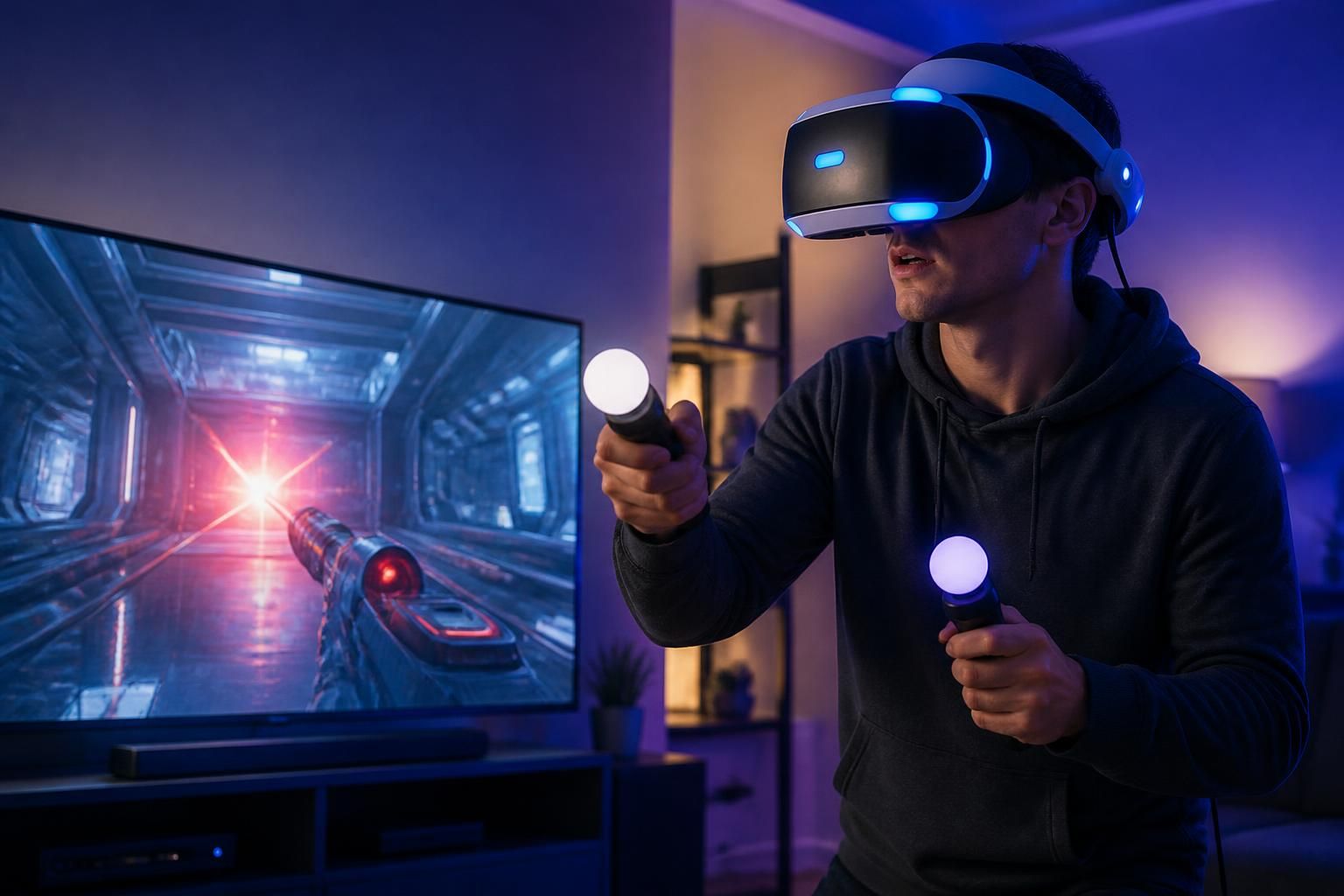
Virtual reality games are reshaping the landscape of gaming experiences, offering players an immersive escape into digital realms that were once the stuff of science fiction. As technology continues to advance, virtual reality (VR) is no longer a novelty but a fundamental component of modern gaming. This transformation invites gamers to engage in ways previously unimagined, bringing a new level of interactivity and presence that traditional gaming methods cannot replicate.
Understanding the Technology Behind Virtual Reality Games
At the heart of virtual reality games lies a blend of sophisticated hardware and software technologies that create a compelling simulation of reality. Head-mounted displays (HMDs) like the Oculus Rift, HTC Vive, and PlayStation VR are crucial components, providing high-quality visuals that occupy a player’s field of vision. These devices track head movements, allowing players to look around and explore environments naturally.
In addition to visual immersion, VR games often incorporate spatial audio, which enhances the experience by simulating sound from multiple directions. This auditory component, combined with haptic feedback through controllers, fully engages the player’s senses. By leveraging these technologies, developers create worlds that feel tangible, allowing players to not just see and hear but also feel integrated into the game.
The Expanding Library of Virtual Reality Games
The catalog of virtual reality games has grown significantly, catering to a wide range of genres and preferences. From action-packed shooters to serene exploration titles, there’s something for every type of gamer. Popular titles such as “Beat Saber” and “Half-Life: Alyx” showcase how VR can elevate gameplay, blending physical activity with intuitive controls for a satisfying experience.
Moreover, VR isn’t limited to single-player experiences. Multiplayer games, like “Rec Room” and “VRChat,” enable social interactions where players can collaborate, compete, or simply socialize in a virtual space. This shift towards community-oriented experiences reflects a broader trend in gaming culture, where social interaction plays a significant role in player engagement.
How Virtual Reality Enhances Immersion and Engagement
One of the standout features of virtual reality games is their ability to create an unparalleled sense of immersion. Players are not just observers; they become part of the narrative, influencing outcomes and experiencing stories in a deeply personal way. This immersion often leads to heightened emotional responses, as players navigate challenges and explore beautifully crafted worlds.
The level of engagement in virtual reality can also encourage players to remain invested longer than typical gaming sessions. In many cases, the immersive nature of these experiences can foster skills such as spatial awareness and problem-solving, which are often utilized in real-world scenarios. For example, a VR puzzle game might require players to physically manipulate their environment to progress, creating a unique blend of gameplay mechanics and physical interaction. For more on this topic, see PGSLOT.
The Role of VR in Evolving Gaming Culture
As virtual reality games gain traction, they are not only changing how we play but also influencing gaming culture on a broader scale. The rise of VR has led to discussions about its potential in fields such as education, therapy, and even training simulations. For instance, educational institutions are exploring how VR can provide immersive learning experiences, allowing students to engage with complex subjects in dynamic ways.
Additionally, the competitive gaming landscape is beginning to embrace VR. While esports has traditionally revolved around conventional gaming formats, the integration of VR could lead to new competitive formats that attract a diverse audience. This evolution is paving the way for innovative tournaments and events that showcase the versatility of virtual reality gaming.
The Future of Virtual Reality Games: Opportunities and Challenges
Looking ahead, the future of virtual reality games presents both exciting opportunities and significant challenges. The ongoing development of VR technology promises even more sophisticated and user-friendly experiences, with advancements in graphics, processing power, and wireless connectivity. As these improvements come to fruition, we can expect richer and more expansive game worlds that push the boundaries of what is possible.
However, challenges remain, particularly regarding accessibility and motion sickness, which can affect players’ enjoyment of VR games. Developers must continue to refine their designs to accommodate a broader audience while ensuring that the experiences are comfortable and engaging. Achieving this balance will be essential for the sustained growth of virtual reality within the gaming industry.
In conclusion, virtual reality games are redefining the future of gaming experiences by providing immersive environments that engage players like never before. The technology behind these games is advancing rapidly, leading to a diverse array of titles that cater to various preferences. As the gaming culture evolves and embraces virtual reality, it will be fascinating to see how these experiences shape not only the gaming landscape but also broader aspects of society. With continuous innovation, the potential of virtual reality in gaming seems boundless, promising to offer even more extraordinary adventures for players around the globe. For those seeking engaging and immersive experiences, the future of virtual reality games is indeed bright.
